Koh Samui and Krabi sit about 250 km apart, on opposite sides of southern Thailand, and a surprising number of our guests put both in the same trip. It makes sense: they are almost opposites. Samui is a round island of granite, coconut palms and calm bays; Krabi is a mainland province of vertical limestone, longtail boats and climbing walls. This guide covers the crossing itself, the order to do them in, and what to plan on the Krabi side. For the Krabi part we lean on our sister site, Via Krabi, an honest Krabi travel guide written the same way we write this one.
The short version
The crossingFerry to the mainland at Donsak, then a bus or minibus across the peninsula. Six to eight hours door to door, one ticket.
FlyingRarely a direct flight. Samui–Phuket is direct, then two hours by road; through Bangkok it costs a day.
The orderNovember–December: more days in Krabi. January–April: either way. May–August: more days on Samui.
Why botherRailay, the Four Islands, kayaking under the cliffs and world-class climbing: nothing like it on the Gulf side.
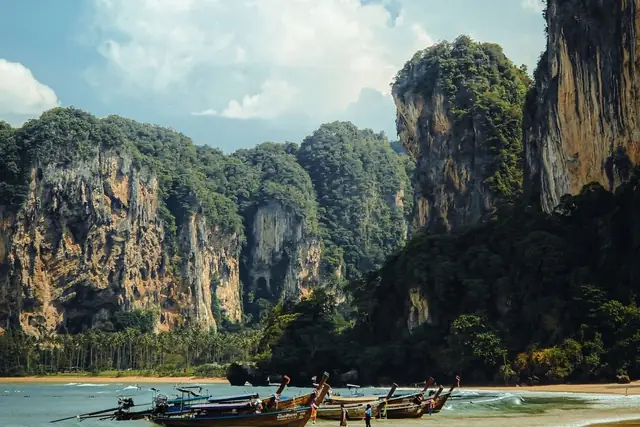
Getting from Koh Samui to Krabi
There is no boat across a peninsula, so every option is some mix of ferry, road and, occasionally, a plane. Here is how they compare in practice.
1. The joint ferry + bus ticket (what most people do)
Several operators sell a single ticket from Samui to Krabi Town or Ao Nang: a ferry from Nathon or the Lipa Noi pier to Donsak on the mainland (about an hour and a half), then a coach or minibus across to Krabi (around three to four hours). Count six to eight hours in total, including the wait at the pier and the change of vehicle, and roughly ฿800–1,300 per person depending on the operator and whether hotel pick-up is included. Book a day or two ahead in high season and take the morning departure: arriving in Ao Nang after dark with luggage is no fun.
2. A private car on the car ferry
The comfortable version: a driver collects you at your hotel, drives onto the Raja car ferry, and drops you at your door in Krabi. It is a little quicker than the joint ticket, five to six hours, with no transfer at Donsak and stops when you want them. It costs several thousand baht per vehicle, which becomes reasonable split between a family or two couples. We can arrange it from any beach on Samui, just ask us for a quote.
3. Flying
Flying sounds faster and almost never is. Direct Samui–Krabi flights come and go with the seasons and are rarely on the schedule, so the realistic options are Samui–Phuket direct with Bangkok Airways (about an hour, then two to two and a half hours by road from Phuket airport to Ao Nang), or a connection through Bangkok, which takes most of the day and costs the most. Flying makes sense if you are heading to Phuket or Koh Lanta anyway, rarely otherwise.
| Option | Door to door | Rough cost | Best for |
|---|---|---|---|
| Ferry + bus joint ticket | 6–8 h | ฿800–1,300 / person | Most travellers, budget trips |
| Private car + car ferry | 5–6 h | Several thousand ฿ / vehicle | Families, groups, heavy luggage |
| Flight via Phuket | 5–6 h | The most expensive | Heading to Phuket or Lanta anyway |
| Flight via Bangkok | A full day | The most expensive | Rarely worth it |
Coming the other way, the same routes run in reverse. Our guide to getting to Koh Samui covers the Donsak ferries and the airport in more detail.

Which order: the two monsoons decide
This is the part that matters most, and the reason pairing the two works so well. Thailand has two rainy seasons on two coasts. The Andaman side, Krabi included, takes its monsoon from roughly May to October. The Gulf side, where Samui is, gets its rain late, from October to December, with November the wettest month.
| Travelling in… | Koh Samui | Krabi | Our advice |
|---|---|---|---|
| November – mid-December | Rainiest weeks | Good season starting | Most of your days in Krabi |
| Mid-December – April | Dry and sunny | Peak season | Both work, split evenly |
| May – August | Good, often dry | Monsoon, rough seas | Most of your days on Samui |
| September – October | Turning wet | Monsoon ending | Check both forecasts |
If your trip straddles a change of season, start on the coast whose good weather is ending and finish on the one whose good weather is starting. For month-by-month detail, read our best time to visit Koh Samui for the Gulf side and Via Krabi's best time to visit Krabi for the Andaman side.
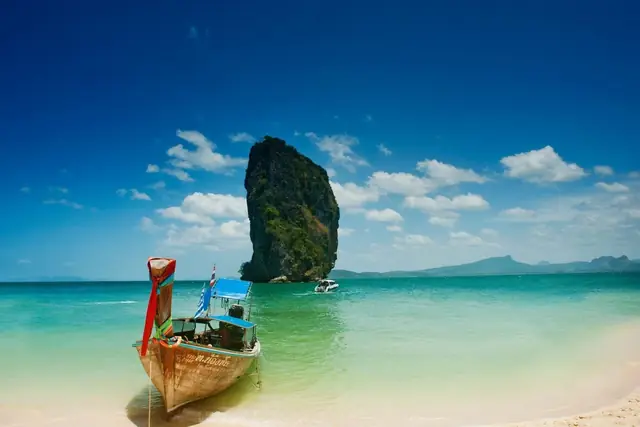
What Krabi gives you that Samui doesn’t
Samui’s strengths are its beaches, its archipelago day trips and the ease of a small island. Krabi is a different holiday, built around landscape and the sea.
- Railay. A peninsula cut off by cliffs, reachable only by longtail from Ao Nang, with some of the most photographed beaches in Thailand. Plan at least a full day; Via Krabi’s Railay guide covers the four beaches, the viewpoint scramble and whether to sleep there.
- The islands. The Four Islands trip (Koh Poda, Chicken Island, Tup and Phra Nang Cave beach), the Hong Islands lagoon and, further out, Phi Phi. Short crossings in calm water during the dry season. Which one to pick, longtail or speedboat, is laid out in the Krabi islands guide.
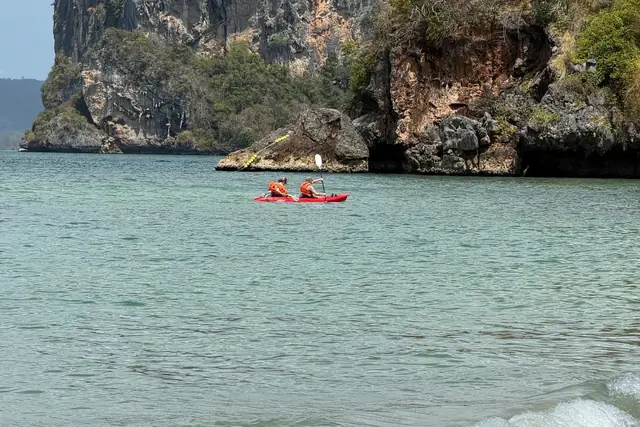
- Kayaking. Paddling through mangroves and under overhanging limestone at Ao Thalane or around the Hong Islands is Krabi at its best, and gentle enough for beginners.
- Climbing. Railay and Tonsai are among the best-known sport climbing areas in Asia, with half-day courses for complete beginners.
- Inland. The Tiger Cave Temple’s 1,260 steps, the Emerald Pool and the hot spring waterfall make a good day off the boats.
Where to base yourself in Krabi
Where you sleep in Krabi shapes the trip more than it does on Samui, because getting around is mostly by boat.
| Base | Good for | Less good for |
|---|---|---|
| Ao Nang | Boat departures, restaurants, first-timers | A beautiful beach on the doorstep |
| Railay | Scenery, climbing, evenings without traffic | Luggage, cash machines, choice of food |
| Krabi Town | Night markets, low prices, local life | Beaches (there are none) |
| Koh Lanta | A slower island stay, long sandy beaches | Short trips: it is a ferry further |
Arriving from Samui with a big bag, Ao Nang is the easy choice for the first nights; the joint tickets drop there and every island trip leaves from its piers.

A two-week plan that works
Two weeks is the sensible minimum for both coasts; on ten days the crossing eats too much of the trip. A version we often suggest, for January to April:
- Days 1–7, Koh Samui. A beach base on the north or east coast, Ang Thong marine park on a calm day, Koh Tao and Koh Nang Yuan for snorkelling, an afternoon on the ATV jungle trails, and the night markets.
- Day 8, the crossing. Morning ferry and bus, Ao Nang by late afternoon, sunset on the beach.
- Days 9–13, Krabi. Railay, the Four Islands by longtail, a kayaking morning, the Tiger Cave Temple, perhaps two nights in Railay itself.
- Day 14, flying home from Krabi airport, 25 to 40 minutes from Ao Nang, via Bangkok.
From November to mid-December, flip it: start in Krabi and spend more of the fortnight there. For the Samui half, our five-day Koh Samui itinerary slots straight in.
Planning the Krabi side?
Our sister site Via Krabi does for Krabi what this site does for Samui: honest guides to Ao Nang, Railay, Koh Lanta and the islands, real prices, and which day trips are worth it.
💡 The honest summary
Samui and Krabi make a great pair precisely because they are so different, and because their bad seasons fall at different times. Budget a full day for the crossing, give each coast a week, and let your travel dates decide which one gets the larger share.