Almost every visitor to Koh Samui sleeps on the east or north coast and never crosses the island. That is understandable, the beaches are over there, but it means missing two things the west has and the east does not: a town with actual history, and a sunset that ends in the water instead of behind a hill. This is what to do with one afternoon on the other side.
Nathon: the only town on the island
Nathon is Samui's administrative centre and its ferry port, and it is the only place on the island with a real streetscape. Three parallel streets run behind the seafront: wooden Chinese shophouses, hardware stores, coffee shops that nobody has renovated, a morning market, and the pier where the boats leave for the mainland. It looks like what Samui was before the beaches were worth anything, because that is exactly what it is.
An hour on foot covers it. Start on the waterfront road, cut inland to the middle street for the old buildings, and finish at the Hai Lam Chinese shrine - red and gold, heavy with incense, built by the Hainanese families who settled the port for the coconut trade. It is the Chinese half of the island's story told in one room, and it takes ten minutes.
One practical note: the town closes early. Most of it shuts by late afternoon, which is why this itinerary walks Nathon first and drives south after.
The piers, and why you may end up here anyway
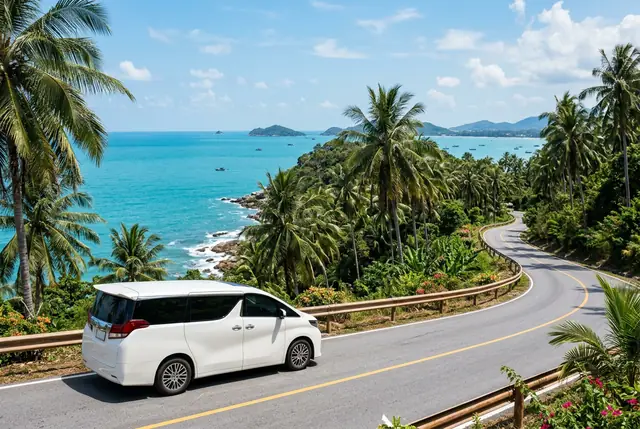
Even people who never plan to visit the west coast often pass through it. Nathon Pier handles the passenger and vehicle crossings to Surat Thani on the mainland, it is where you land if you arrive by the bus-and-boat route from Bangkok. Further south, the Lipa Noi car ferry is where rental cars, minibuses and lorries come and go for Don Sak.
Neither is where you catch a boat to Koh Phangan or Koh Tao - those leave from the north coast, from the Big Buddha pier at Bang Rak and from Maenam. If you are working out which pier your ticket means, our guide on how to get to Koh Samui lays out all four, and getting around Koh Samui covers what it costs to reach them.
The quiet temple with the second mummified monk
Everyone knows about Wat Khunaram, in the south, where Luang Pho Daeng has sat in a glass case since 1973. Far fewer know that the west coast has its own: Wat Kiri Wongkaram, at the foot of the hills near Taling Ngam, where a seated monk is displayed in a side pavilion and the compound climbs quietly into the trees.
It asks nothing of you and there is never a queue. The same rules apply as anywhere: shoulders and knees covered, shoes off inside, and it is a body rather than an exhibit - no flash, no posing. If the southern temples interest you, they make a route of their own, which we cover in the guide to the temples of the south.
The sunset coast, beach by beach
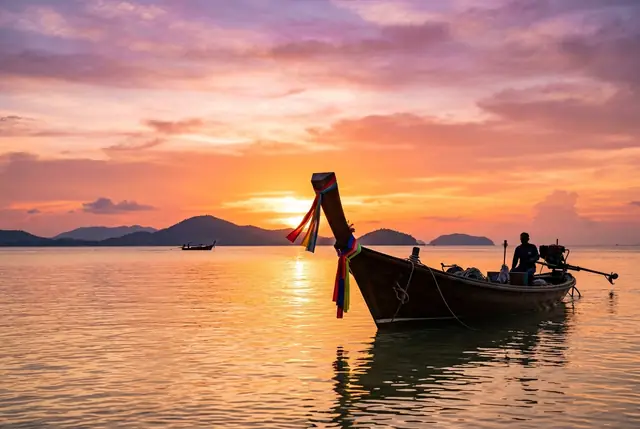
This is the reason to be here at six o'clock. The west coast faces the mainland across a flat channel, so the sun goes down over open water, and the sea is calmer here in the months when the east coast is choppy.
Lipa NoiThe swimming beach of the west: flat, shallow, bath-warm water with no waves. The best west coast beach with small children, and the sunset is straight ahead.
Taling Ngam & Pang KaThe quietest coast on Samui, looking at the Five Islands. Coarser sand and a long tide, so it is a sunset and dinner coast rather than a swimming one.
Bang PorNorth-west: shallow glassy water and a row of open-sided restaurants built out over it on stilts. The best value seafood on the island, at a table with the sea underneath.
Laem YaiThe north-west headland: rock, coconut plantation, and one of the two or three places where the sun sets over open water with nothing built in the way.
If you want one line to plan around: swim on the east coast, watch the sunset on the west, eat on the north. Our guide to Samui's sunsets ranks the spots, and the beach guide explains which bays are for swimming and which are for looking at.
Dinner over the water at Bang Por
The stilt restaurants at Bang Por are the meal we send people to when they ask where locals eat. Simple rooms open to the sea, whole grilled fish, crab, squid, morning glory, and prices the beach resorts have forgotten. Cash only, and worth arriving before dark so you see the water while you order.
If you would rather eat closer to a market crowd, the night markets are on the other coasts - Bophut on Friday, Lamai on Sunday, Maenam on Thursday. The night market calendar has the full week, and we run a guided evening through them if you would rather be walked around than guess: night markets and street food.
The afternoon, hour by hour
| Hour | Where | Why then |
|---|---|---|
| 3 pm | Nathon old town | The streets are still open and the light is good on the wooden facades. |
| 4 pm | Hai Lam shrine | Ten minutes, and the quietest moment of the day inside. |
| 4.30 pm | Wat Kiri Wongkaram | On the road south, and never busy. |
| 5.30 pm | Taling Ngam or Lipa Noi | The last hour of light over the Five Islands. |
| 7 pm | Bang Por | Dinner over the water, on the way back north. |
It is a drive: Nathon is about forty-five minutes from Chaweng, Lipa Noi closer to an hour. That is the main reason people skip the west coast, and the main reason it stays quiet. If you would rather not do the road twice in the dark, we run the whole afternoon as a half-day, Nathon and the west coast sunset, with the timing shifted through the year to follow the sunset.
Two things to know before you cross
Mosquitoes. The west side has them at dusk, more than the east. Repellent belongs in your bag, not in the car.
The rainy months. From late October to December the sunsets here are unreliable and the sky can stay grey for days. That is also the season when the interior roads are at their worst, see our month-by-month guide before building a trip around a sunset. Every place named in this article, with its coordinates and access, is on the island map.